

A new report suggests that mattress retailers can best help weary shoppers by focusing on the quality of their sleep, and not just on how many hours they are sleeping.
It also outlines opportunities for mattress retailers to leverage sleep data, research and education to build consumers’ trust, to highlight premium mattress features that directly address common sleep disruptions, and to position smart technology as a value driver and not an up-sell.
The report from the National Sleep Foundation, supported by Tempur-Pedic, combines nationally representative NSF survey data with insights from more than 190 million nights of sleep data captured through Tempur-Pedic Sleeptracker-AI technology to reveal widespread and significant unmet needs centered around comfort, sleep disruption and overall sleep performance.
Many adults, the report notes, are not meeting minimal sleep duration recommendations and are waking once or even twice throughout the night.
It’s not enough, the findings reveal, for the bedding industry to simply talk about sleep duration with consumers, although most adults are still not getting recommended levels of sleep. The study reports that most adults sleep 6.5 to 7 hours per night, well below the 7 to 9 hours of sleep recommended by sleep experts.
Significantly, the study reveals that 70% of survey respondents report difficulty staying asleep, 61% struggle to calm their minds at bedtime, and 47% experience physical discomfort during sleep.
Tempur-Pedic officials say these findings reinforce the fact that today’s sleepers want more than just a new mattress — they are also seeking a solution that gives them comfort, less sleep disruption and higher overall sleep quality.
“Consumers are increasingly aware that sleep impacts every part of their lives, but many are still not achieving truly restorative sleep,” said Jill Johnson, vice president of Tempur-Pedic brand. “This research highlights the importance of helping shoppers understand that better sleep goes beyond time in bed. It starts with the right environment and the right support.”
The findings present an opportunity for mattress retailers to shift their conversations with shoppers from a focus on “hours slept” to a broader discussion about sleep quality, and to align specific product benefits with identifiable consumer pain points, Tempur-Pedic officials note.
The research highlights four primary causes of poor sleep quality in the U.S.:

- Racing thoughts and stress. Excessive cognitive activity delays falling asleep and is the leading self-reported cause of delays in falling asleep.
- Physical discomfort. Body pain and pressure points lead to tossing, turning and nightly wake-ups in almost half of all U.S. adults.
- Environmental disruptions. Temperature, noise and light are cited as consistent barriers to uninterrupted sleep.
- Snoring. This is a widespread problem, with 45% of adults saying they notice snoring at least occasionally.
“Insights from millions of real nights of sleep allow us to better understand how various populations sleep night after night,” Johnson said. “That perspective helps drive continued innovation focused on improving sleep outcomes.”
Tempur-Pedic officials said those insights closely align with features that premium bedding products are designed to address, thus reinforcing the importance of differentiated products on retail sales floors.
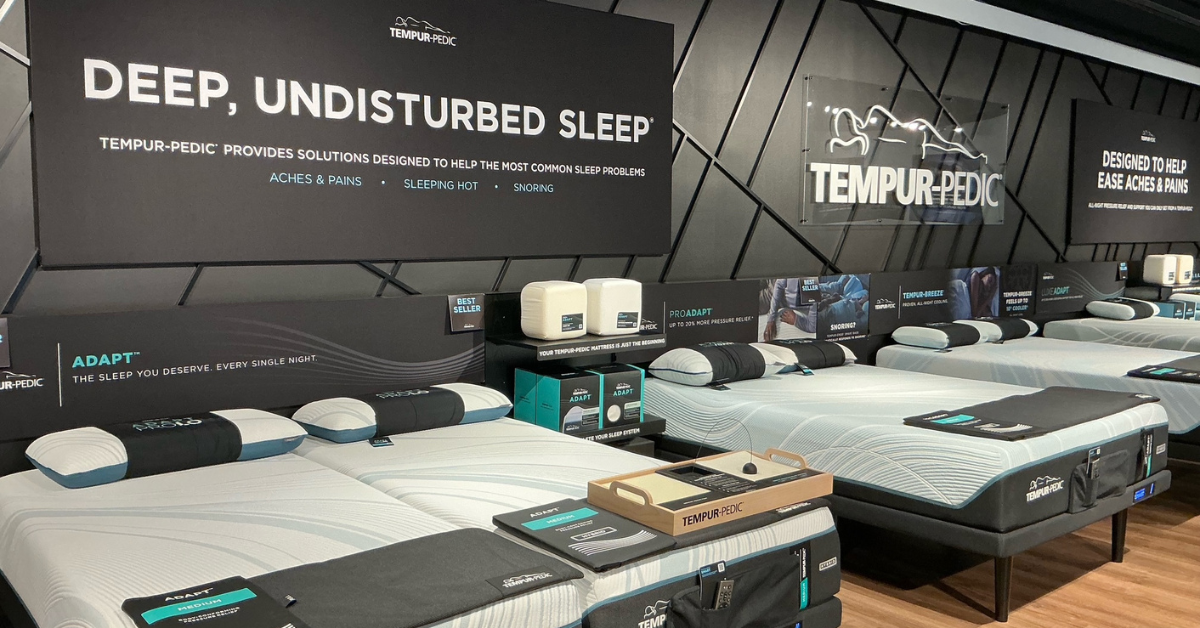
Tempur-Pedic said it continues to invest in materials and technology designed to solve the challenges identified in the research. It said its Tempur-Material adapts to the body to reduce pressure points and improve comfort, and its smart bases powered by Sleeptracker-AI provide personalized insights and can automatically adjust to help reduce disruptions such as snoring.
The National Sleep Foundation is an independent, nonprofit organization dedicated to improving health and well-being through sleep education and advocacy.