

Between in-store and online, consumers can find almost anything they can think of. But in a sea of seemingly endless options, it’s the ones that feel custom-made that stand out.
Deloitte recently published research that found consumer demand for personalization increased 20% between 2022 and 2024, with three in four consumers saying they are more likely to purchase from brands that deliver personalized experiences. The sleep products industry is no exception.
BedGear said it sees personalization moving from a product feature to a retail strategy.
Jonah Nelson, senior director of brand strategy at BedGear, said traffic was lighter at the July Las Vegas Market. But retailers who visited the company’s showroom came ready for deeper conversations about their businesses.
“They came in looking for solutions to help drive their business,” Nelson said. “We talk a lot about product, but the programs and sell-through opportunities that we try to bring to the table to help our retailers not just get our products on their floors, but also do the important part of selling them to their customers.”
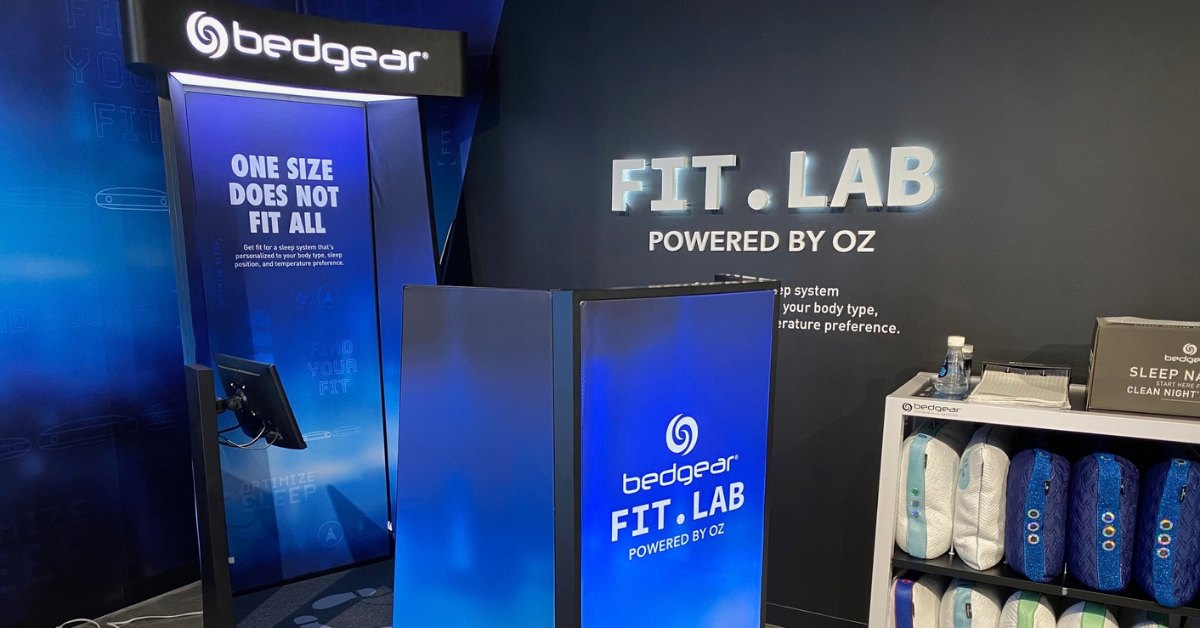
Nelson said personalization is at the core of BedGear as a brand. He added that the company starts with a basic premise: “One size does not fit all” when it comes to bedding. Across much of the industry, he said, pillows and mattresses are still largely built for averages rather than tailored to the individual.
For retailers, however, personalization can make a potentially complicated purchase easier to navigate.
“Consumers continue to be a bit apprehensive just coming into the category,” he said. “Their defenses are a little bit up, and they come in feeling a little bit at a disadvantage in terms of knowledge and understanding of the products.”
A guided fitting process can help break down those barriers, he said. Rather than asking shoppers to navigate an assortment based primarily on terminology or price, retail sales associates can ask questions about how they sleep and what problems they are trying to solve. That process can help consumers better articulate their needs and feel more confident in their eventual purchase.
“Because sometimes we think we know what we’re looking for, but having an expert guide us through that conversation, and ask leading questions that help us get to the root causes of why we’re in that store looking for new sleep products is critical,” Nelson said.
Personalization is also becoming more significant as consumer attitudes toward sleep change. Nelson pointed to the growing focus on wellness and longevity. These days, sleep is becoming more highly regarded in overall health. At the same time, younger generations accustomed to highly customized consumer experiences are gaining spending power.
“We’ve been trained, especially as younger consumers, that we can and should be able to tailor our consumer experience to our own personal needs and desires,” he said.
For pillows, BedGear considers factors including sleep position, body type, temperature and comfort preferences. Its modular hybrid mattress line extends that approach by allowing support levels to be customized for each side of the bed, which is particularly important for couples.
For retailers, getting that fit right could have benefits after the initial sale as well. Nelson said BedGear sees its personalized fitting process contributing to fewer returns and comfort exchanges, reducing costs and headaches for retailers while potentially keeping more discarded bedding products out of landfills.
BedGear is also working to create greater consistency between the way shoppers are fitted online and in stores.
The company has accumulated millions of data points from customer fittings, Nelson said, using information around body type, sleep position and individual preferences to inform product recommendations. That centralized information feeds digital tools such as BedGear’s Sleep ID quiz as well as its in-store training and point-of-purchase materials.

In 2027, the company plans to take that strategy a step further with the launch of an all-new Fit Lab, an in-store experience that will allow consumers to receive a body scan and product recommendations based on their individual needs.
But personalization alone is not enough, he said. Nelson said products still need to deliver the performance benefits consumers expect from bedding, including pressure relief, motion isolation, airflow and temperature regulation.
“We don’t want to lose those just to gain personalization,” Nelson said. “We want to combine them with personalization so we can deliver truly better sleep for each individual out in the marketplace.”
BedGear is also extending the strategy into another growing consumer priority: natural materials. In November, the company plans to launch Naked, a latex-driven collection of modular hybrid mattresses that applies the personalization concepts found in BedGear’s existing lineup.
“We’ve built a product that’s meant to strip away anything that’s not a natural material and isn’t sustainably sourced, and having that clean sleep comes together with personalization,” Nelson said.
Personalization can be an effective strategy for winning over consumers, but it’s important to do it correctly.
Research from Boston Consulting Group, a management consulting firm, found that two-thirds of consumers have had a negative personalized experience with a brand that led them to end the interaction. For retailers, that’s important to remember: It may be less about offering more choices and more about helping consumers find the right one.