

Wearable technology has proven useful in helping people track their sleep and exercise, which is a positive sign for the bedding industry.
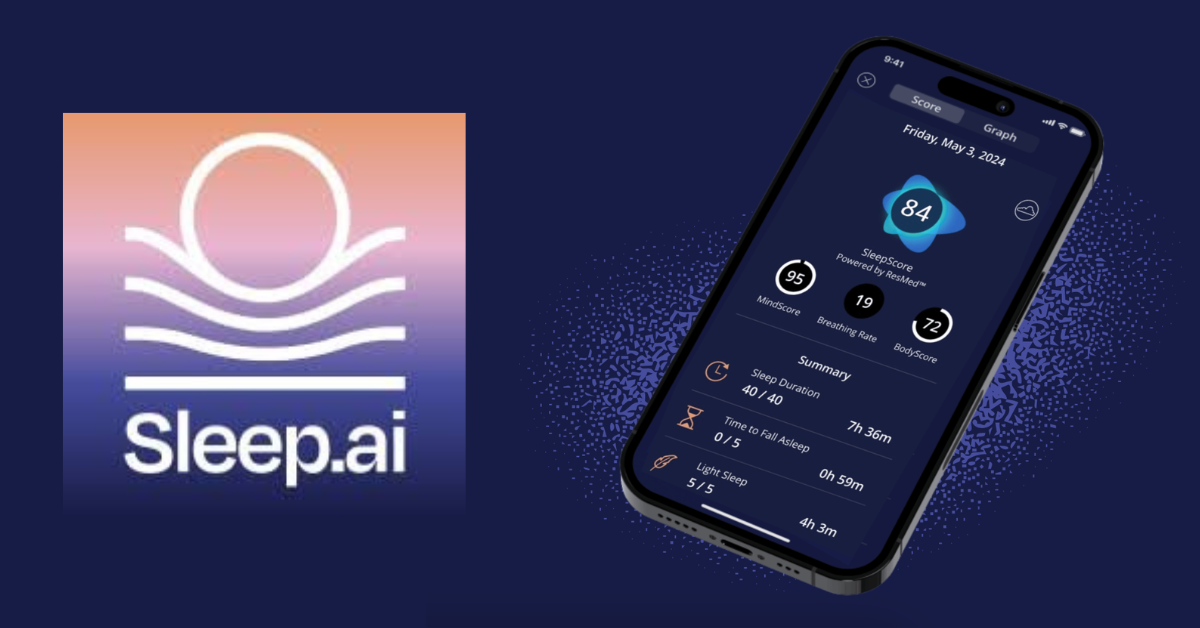
However, wearables can often be uncomfortable, especially when worn to sleep, and there are a range of privacy issues associated with sharing intimate details (i.e., heart rate, location, habits, etc.) with wearable makers. That’s why Sleep.ai has launched a solution to this problem called Sleep Sense.
The new technology turns any smartphone into a seamless, privacy-aware sleep sensor that automatically gathers sleep data for nearly every user without requiring wearables, hardware or manual input.
The company says that despite the growing prevalence of wearables, most people do not consistently track their sleep, resulting in significant gaps in personalization, health insights and outcome measurement.
Sleep Sense addresses this by providing nightly sleep data to users, with no requirement to purchase a wearable or switch from their preferred wearable.
Sleep.ai’s chief operating officer, Gil Adato, tells Bedding News Now that few sleep tracking solutions are scalable.
“In the U.S., there is about a 50% penetration rate for wearables,” he says. “But in a place like Germany, it’s 9%, and lower in other countries. Then when you look at wearable owners, only about 10% to 15% of them actually sleep with the wearables. So by default, you’ve significantly narrowed down your ability to collect sleep data from the general population to only those who own wearables, to only those who sleep with wearables.”
Sleep Sense addresses the challenge of collecting sleep data that is trusted at scale, according to Adato, and it’s focused on the one device nearly everyone has on them all the time: their phone.
It uses a suite of advanced AI, privacy-preserving design and multimodal inference techniques to detect sleep and wake patterns through a smartphone. Here’s what that means:
- Sleep Sense automatically detects sleep using phone-based inference. No setup, charging or daily user action required.
- Hybrid spatio-temporal models are used to pinpoint bedtime and wake time with accuracy comparable to PSG-validated trackers like EEGs and other clinical tools.
- The technology analyzes motion, light and device usage patterns as well as extensive models based on datasets with almost 1 billion hours of sleep.
- What happens in people’s bedrooms is very sensitive, so these technologies are built with no audio recording, fully GDPR and ISO compliant, and designed for enterprise-level data safety and transparency.
By enabling near-universal measurement without wearables or onboarding friction, Sleep Sense aims to deliver personalization and recommendations to every user while improving their AI models with more unbiased sleep data.

“We’re taking the pressure off of people having to buy a device,” Adato adds. “We’re taking away the inconvenience and also solving the privacy issue with audio-based sleep tracking solutions. We use the smartphone as a foundation without using the microphone, so no listening and no recording. And sleep sense can understand sleep on a level that is comparable to leading consumer devices, as shown in a recent whitepaper we published.”
Colin Lawlor, founder and CEO of Sleep.ai., says Sleep Sense is a major step forward for the entire health and wellness ecosystem.
“For years, it is clear that sleep is one of the most powerful predictors and influencers of overall health, yet it has never been measured at scale because it required specific wearables, hardware or daily user effort. Sleep Sense gives organizations the ability to personalize programs, understand risk and demonstrate outcomes across nearly their entire population. It is the first time universal sleep sensing has been possible, and it sets a new standard for what companies can expect from sleep technology.”
Sleep Sense is available as an API and SDK integration for partners across health, wellness, consumer electronics, insurance and digital therapeutics.
“Our goal is not to chase customers — it’s to power our partners to deliver better experiences and business outcomes through sleep intelligence and through sleep improvement,” Adato adds. “We’re not saying or claiming to do anything that we can’t prove with data. I always say that half of our brain is always thinking about proof points, studies and publications and the other half knows that even the most efficacious solutions have to engage people and deliver value.”