
Virtual showrooms, digital replicas of physical showrooms, provide a platform where customers can explore products. Although this isn’t a brand-new concept, virtual showrooms will become increasingly important in retail.
A recent article on Shopify’s website states: “A virtual showroom is no longer a pandemic-era experiment — it’s the new storefront for modern retail. Unlike a static website, it lets customers explore products interactively, creating an immersive experience that mimics a physical store.”
According to Grand View Research, “The global extended reality market size was estimated at $142.39 billion in 2023 and is projected to reach more than $1 trillion by 2030.”
That is massive growth. While that statistic covers a broad range of XR technologies (including virtual reality and augmented reality) and applications like entertainment and gaming, retail is also an important and valuable sector.
Virtual showrooms are not designed to replace physical ones, but rather serve as an accompaniment. According to Shopify, “The virtual experience strengthens a click-and-mortar strategy by connecting virtual shopping to physical purchasing.”
Although the term “click-and-mortar” was coined in 1999 by David Pottruck, then co-CEO of brokerage firm Charles Schwab, the term feels more prescient in today’s retail landscape. Some of today’s most successful retailers are seamlessly integrating online and in-store experiences.
Viki Zabala, chief strategy and growth officer at First Insight, a Warrendale, Pennsylvania-based retail consumer insights and AI-driven predictive analytics company, said home furnishings is a “unique, challenging category due to its hybrid nature.” She added: “Discovery is now largely online, but the physical experience still matters — customers want to experience materials and scale.”
With events like the recent nationwide snowstorms that affected travelers to and from Las Vegas Market in January, the ability to connect virtually was helpful for many companies.
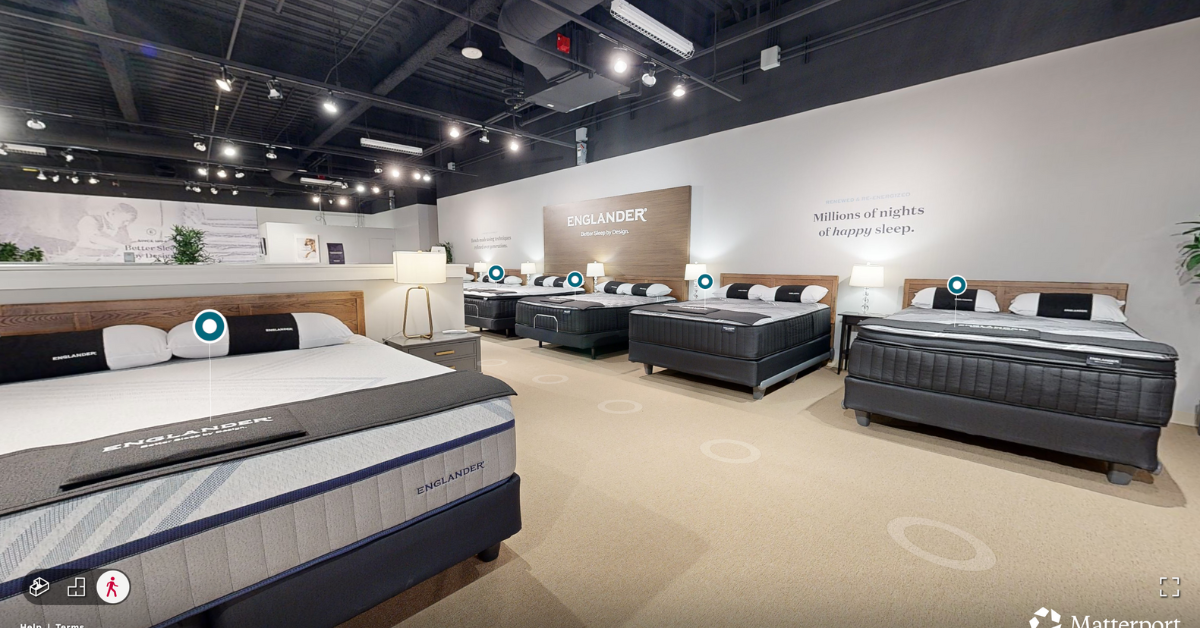
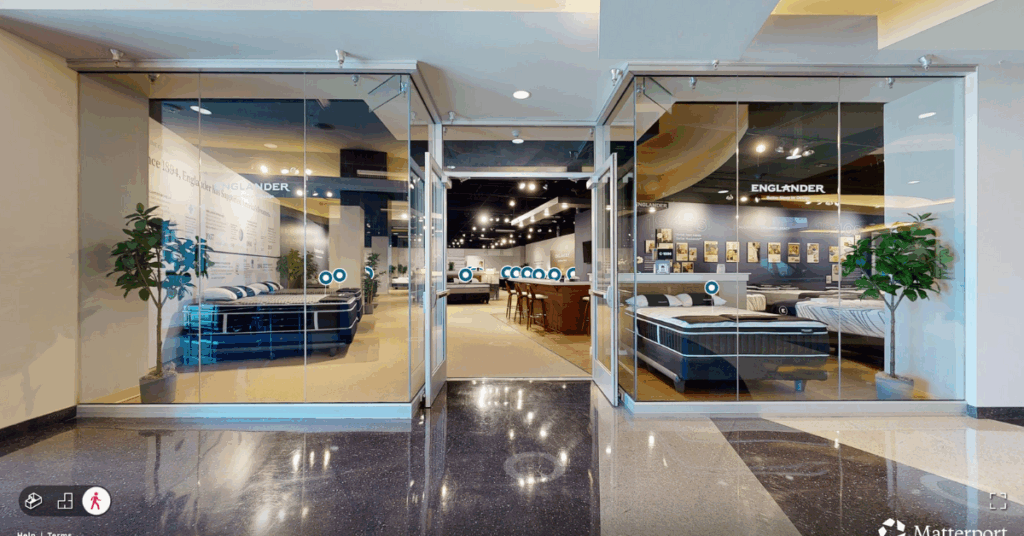
One example is Chicago-based mattress manufacturer Englander, which launched its new virtual showroom for the recent winter market. The new tool enabled retailers to view the showroom virtually, helping them plan ahead of a visit or revisit the space again after the show’s conclusion.
“These markets are vital for our brand,” said Lou Paige, president and CEO of Englander. “We invest time and energy into showcasing our new and bestselling mattresses for the brief time we are on-site at market. With our new virtual showroom, we can significantly extend the impact after market, allowing us to engage audiences through a highly visual, compelling virtual tour where retailers can connect and purchase in real time from across our Englander portfolio.”

Visitors to Englander’s virtual showroom can access spec sheets and informational product videos, and click to purchase products. The Specialty Sleep Association, which exhibits at Las Vegas Market, also has a virtual showroom. The not-for-profit represents a number of retailers and manufacturers, including HealthGuard, Williams Co. and Naturepedic, all of which can be explored online.
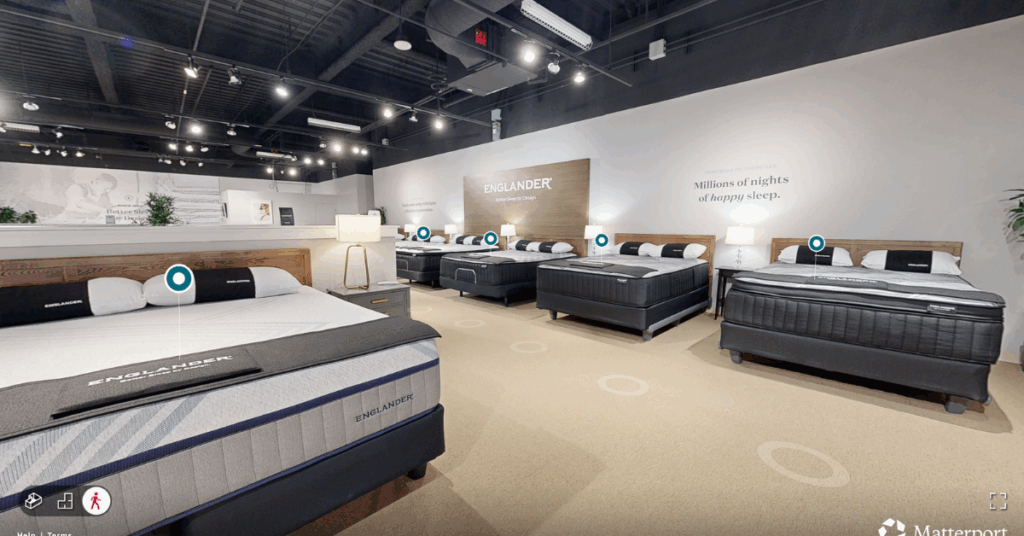
For companies that invest large amounts in renting showroom space, virtual showrooms help extend market longevity, allowing for product exploration well after the week is over.
In addition to strengthening a company’s online presence, virtual showrooms can also improve sustainability by reducing the shipping cost of physical products to locations and showcase capabilities by housing 3D prototypes. Or for those who don’t have physical showroom space, a virtual version could offer a compelling and budget-friendly alternative.
Virtual showrooms might not make sense for all companies, but the flexibility of such a tool could help retailers and manufacturers stay competitive in an increasingly “phygital” world — that is, one that bridges the gap between the physical and the virtual.