

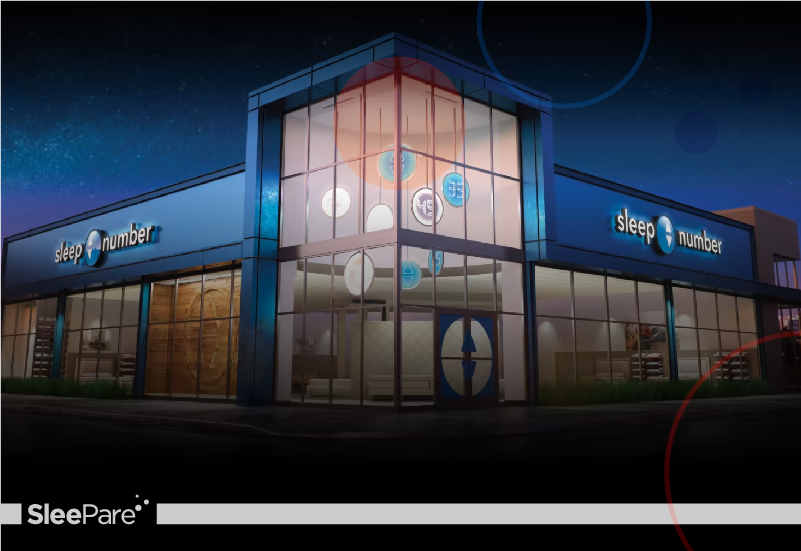

Sleep Number may be forced to file for bankruptcy, according to its annual securities exchange 10-K report.
The Minneapolis-based company has 600 stores and warns that if it can’t secure sufficient financing, it “could be forced to terminate, significantly curtail or cease our operations, pursue strategic alternatives or commence a case under the U.S. Bankruptcy Code.”
It adds, “There is substantial doubt about the company’s ability to continue as a going concern.” The retailer has closed nearly 40 stores since the end of 2024.
More store closings are expected as part of the company’s cost-saving and operational-efficiency initiatives. “Select stores have been closed, and additional stores are expected to be closed, and store remodels have been delayed,” the filing says.
“These closures and older retail store designs have resulted and may continue to result in higher-than-expected costs, charges, continued rent liability, lost sales, lower brand awareness, weakened customer experience, deteriorated reputation or otherwise negatively impact the company’s sales, profitability, cash flows, availability of credit and financial condition,” Sleep Number says.
Sleep Number says its growing list of competitors now includes regional and local specialty bedding retailers, bedding manufacturers, home furnishings stores, mass merchants, national discount stores and online direct-to-consumer marketers, and they are to blame for the company’s struggles.
“There is a high degree of concentration among manufacturers who produce innerspring, memory foam and hybrid beds under nationally recognized brand names, including Tempur-Pedic, Sealy, Stearns & Foster, Serta and Beautyrest,” the company said in its filing.
“National manufacturers still dominate the bedding industry,” Sleep Number continues. “There has recently been market consolidation, with Somnigroup owning the Tempur-Pedic, Sealy and Stearns & Foster brands, and also owning the Mattress Firm brand and stores. Brands including Saatva, Purple, Casper and Nectar, which started online, have now moved into traditional retail channels for growth.”

New CEO Linda Findley said on a conference call that the company removed more than $185 million of annualized costs and has identified another $50 million of annualized fixed costs that it is executing on now.
“We are still in full turnaround mode, and our progress in 2025 doesn’t change the fact that we still have hurdles to clear in 2026,” she said.
Unfortunately, the filing states a hard truth:
“While these actions demonstrate a series of material steps taken to improve the company’s financial condition, the company has a history of net losses over the past three years and expects to continue to incur additional losses in the near future. In addition, the company anticipates that it will not remain in compliance with the financial covenants of its credit agreement for the next 12 months.”