

Bedding Industries of America uses an acronym to define its mission as a bedding manufacturer: Better Industry Adaptation.
That has been at the forefront of the company’s growth strategy as it has proven it can succeed in tough times.
Steve Karns, BIA’s vice president of sales, said that even though it’s a strange time in the industry, half of his sales representatives are up this year.
“That’s phenomenal,” he says of the sales reps who are up. “Some of our reps are down, but we have gained a lot of Top 100 accounts. Our protege, the Fab Five YourComfort selling system, works. The top players have their own programs, but as far as brick-and-mortar customers, we’re winning with the Fab Five.”

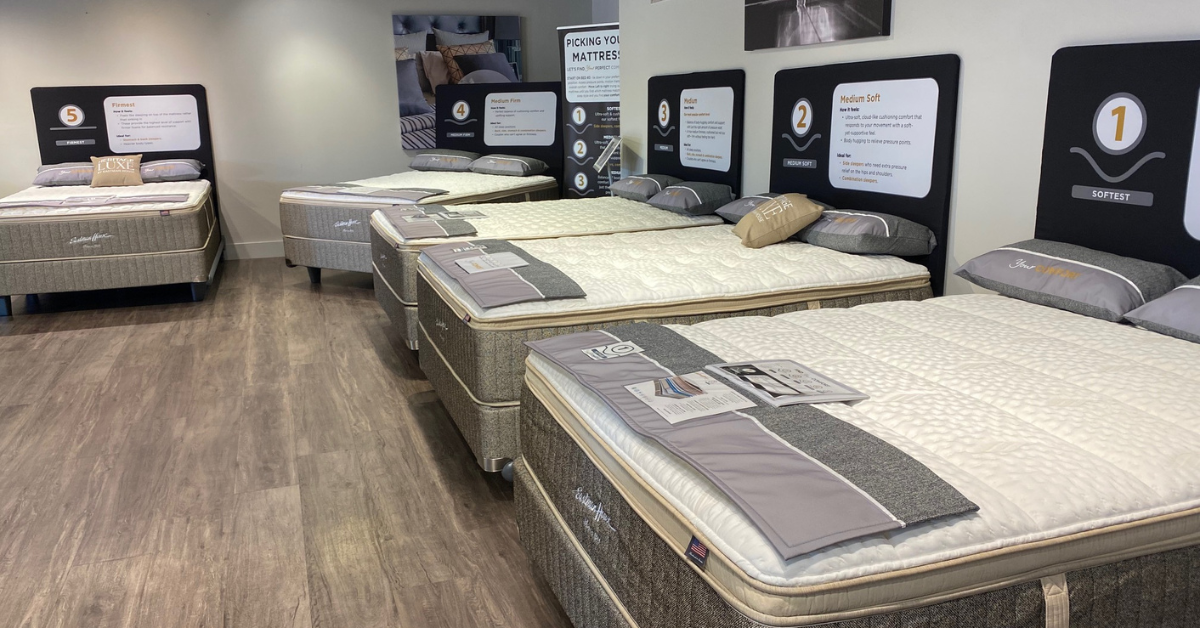
The Fab Five strategy lets consumers try out the same mattress at five different comfort levels, ranging from firm to plush. Starting in the middle and moving either left or right, depending on whether the customer seeks a firmer or softer feel. The progression from mattress to mattress allows them to decide which comfort level feels best.
Consumers relate to it because you don’t have to talk about price up front, Karns said. You’re strictly finding the right bed and taking home what you’re testing. Salespeople love it because it’s a defined process that they can easily take everybody through.”
Part of the reason the model works in the current landscape is that “the lower-end market is not there,” Karns said.
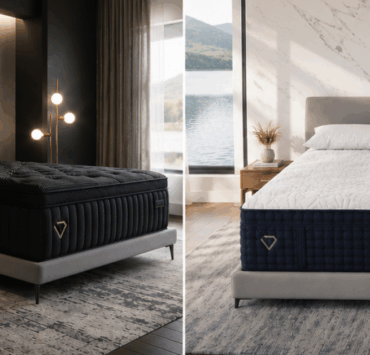
“That consumer has not reentered the marketplace yet, so retailers need a more compelling story and a better experience for the consumer to get into that store. We’re hyper-focused on the company’s acronym, Better Industry Adaptation. One of the pillars of this acronym is technology or patents, and that’s what afforded us our relationship with Saatva and Harvest, which has a revenue-share program and is a direct reaction to e-commerce. We realize that brands are born online right now and not necessarily in-store.”
James Short, who came up with the Harvest brand, built it on a profit-sharing model that gives retailers a share of the profit from Harvest mattresses purchased at marketplace retailers, like Walmart or Amazon.
So if a consumer goes into a local mattress retailer’s store, looks at a Harvest bed and then leaves to go buy it online, the retailer will get a percentage of that online sale.
Karns said products like these speak for themselves, and consumers are no longer as focused on price as they once were.
“If a consumer is just buying product based on price, they’re going to miss the boat,” he said. “You need people that can come in and actually help drive your business, and if you don’t have reps that are coming in, especially at the brick-and-mortar level, it’s going to be tough to stay in business. I’ve been involved with a bunch of companies in an array of sizes and the difference I’ve found I have called separation points.”

While media like postcards and TV advertisements have been separators in the past, Karns explains that digital media such as social media have become the new separator.
“Those who are looking at how to best use those systems are the guys rising to the top of the heap, he said. “Smaller retailers should pay attention and do the same thing. They have control costs and figure out how to keep the door swinging and not lose money. That’s what digital can do.”
Another point he makes is that, because of the average time it takes to replace a mattress — seven to 10 years — consumers don’t necessarily know how much they should be paying. This goes back to taking the focus off the price and putting it on the benefits of each mattress.
Think about tires. If you went in to buy new tires today, would you know how the price has changed compared to last time?
Karns said it’s easy to get caught up in challenges like foam shortages and consumer confidence when you’re in the mattress industry. But those who don’t live it every day likely won’t know the difference.
“We may or may not have a price increase, but I would say that the most important thing is having suppliers that can ship you on a timely basis,” Karns added. “That’s going to be the differentiator for the rest of the year. I do believe that bedding is going to be a hot spot in the home furnishings industry for the second half of the year. It’s going to be a leader because all of the beds bought during COVID are now hitting maturity. The cycle, which was one of the biggest booms the mattress industry has ever seen, will cause people to come back for more.”