
Sleep — something as old as humanity itself — and how consumers are prioritizing it, is becoming new, in a way.
With the advent of artificial intelligence, sleep products are integrating more technology than ever before, leading to increasingly personalized experiences to help users achieve a great night’s sleep. Sleep has also increasingly been in the spotlight because of growing awareness of sleep’s importance in overall health.
On social media, trends like sleepmaxxing (a set of practices, techniques and products intended to maximize or optimize sleep quality and duration) are gaining popularity on TikTok.
According to a recent article by McKinsey & Co., a global management consulting firm based in New York City, its latest Future of Wellness research states: “Sleep is the second-highest health and wellness priority for consumers — and also where consumers say they have the most unmet needs.”
Also, according to McKinsey: “Technological solutions, such as consumer wearables, have also increasingly addressed the global decline in sleep levels. In the U.S., the number of sleep-technology patents has increased by an average of 12% a year over the past decade.”
Within the realm of sleep patents, devices to detect sleep quality, motion and bio-signals have the most patents. The same research also mentions that market forecasts indicate the resulting influx of sleep devices could take the global market to $32 billion by this year, up from $11 billion in 2019. That’s a massive increase and demonstrates how much consumer demand for smart sleep products has grown.
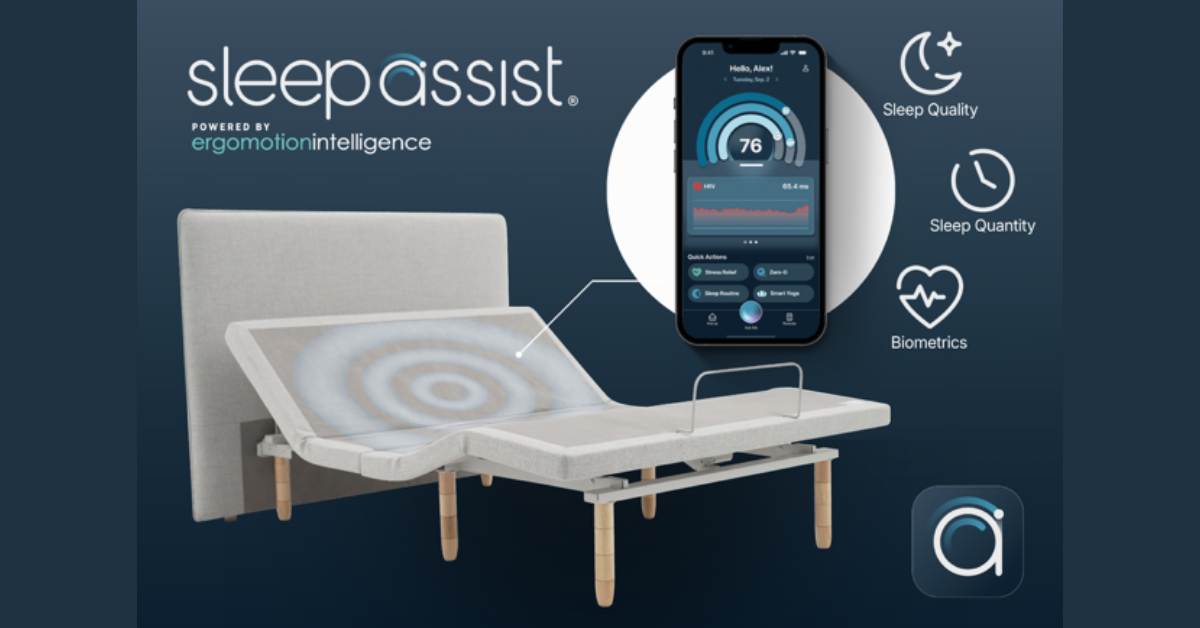
One recent entry in the sleep technology marketplace is Ergomotion’s new Sleep Assist app, which debuted this month at the Consumer Electronics Show in Las Vegas.
According to the Santa Barbara, California-based company, the app features intelligent insights, adaptive guidance and seamless smart-bed integration using built-in smart sensors. Sleep Assist enables users to track total sleep, heart rate, respiratory rate, movement and snoring, while helping them better understand their individual sleep patterns and behaviors over time.
The app also includes zero-G and relaxation presets, including stress relief and optimizations tailored to each user’s nightly sleep patterns. Unlike some other products on the market, the Sleep Assist app requires no subscription and is slated to go live at the end of the second quarter.
It’s a sign of the times. The bedding industry — and consumer preferences — are moving away from one-size-fits-all solutions to data-informed, hyper-personalized products that can make adjustments throughout the night and get smarter over time.

As far as what the burgeoning sleep technology market will look like in the future, the sector is ripe for continued innovation.
Bedrooms will morph into sleep ecosystems, an environment where products will “speak” to one another, working together to create optimal sleep conditions. For example, while a mattress might make adjustments throughout the evening, an integrated bedding system might also communicate with smart lighting to assist with falling asleep and climate control to create the ideal sleeping conditions.
Sleep technology will also become less intrusive as technology improves; for example, sensors within mattresses are becoming less noticeable. Deeper AI integration and increasingly “smarter” products will certainly help people get a better night’s sleep, but they could also cause an over-reliance on technology, and in the long run, could do more harm than good.
Orthosomnia, according to Harvard Health, is a term that describes “an unhealthy pursuit of perfect sleep.” Aside from a certain subset of people who become unhealthily sleep-obsessed, another consideration is technological failures. In October 2025, an Amazon Web Services outage caused certain smart beds to get stuck in uncomfortable positions or overheat, causing an undesirable temperature.
As with all technology, none is without drawbacks, and the future of sleep products is no exception. But as consumers continue to prioritize their health, the sleep technology marketplace will only continue to grow. And retailers and manufacturers should take note, creating or stocking products. After all, who doesn’t want a piece of a $32 billion pie?